The "Misteri"
More closely
The construction of the "Misteri" for the Procession of the Good Friday in Procida is a crucial moment of tradition, which involves young people and artisans of the island in a collective work of great artistic and spiritual value.
What is a "Mistero"?
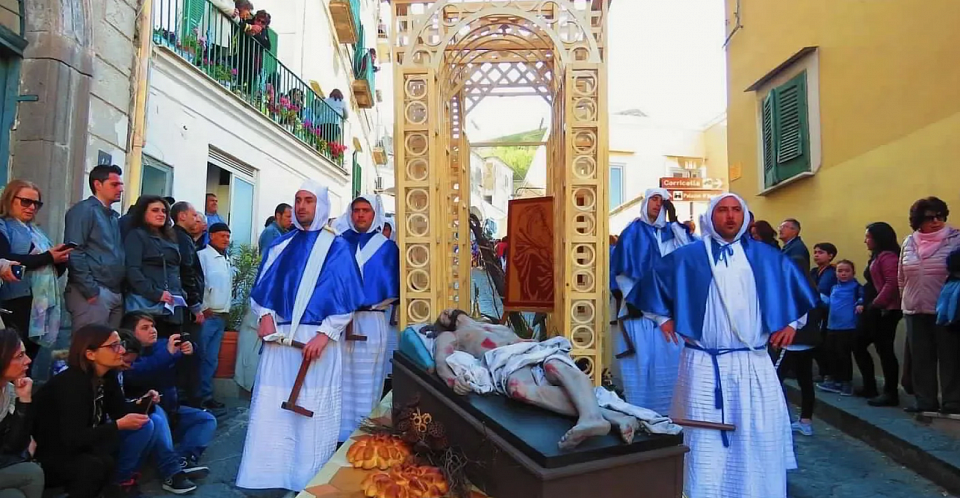
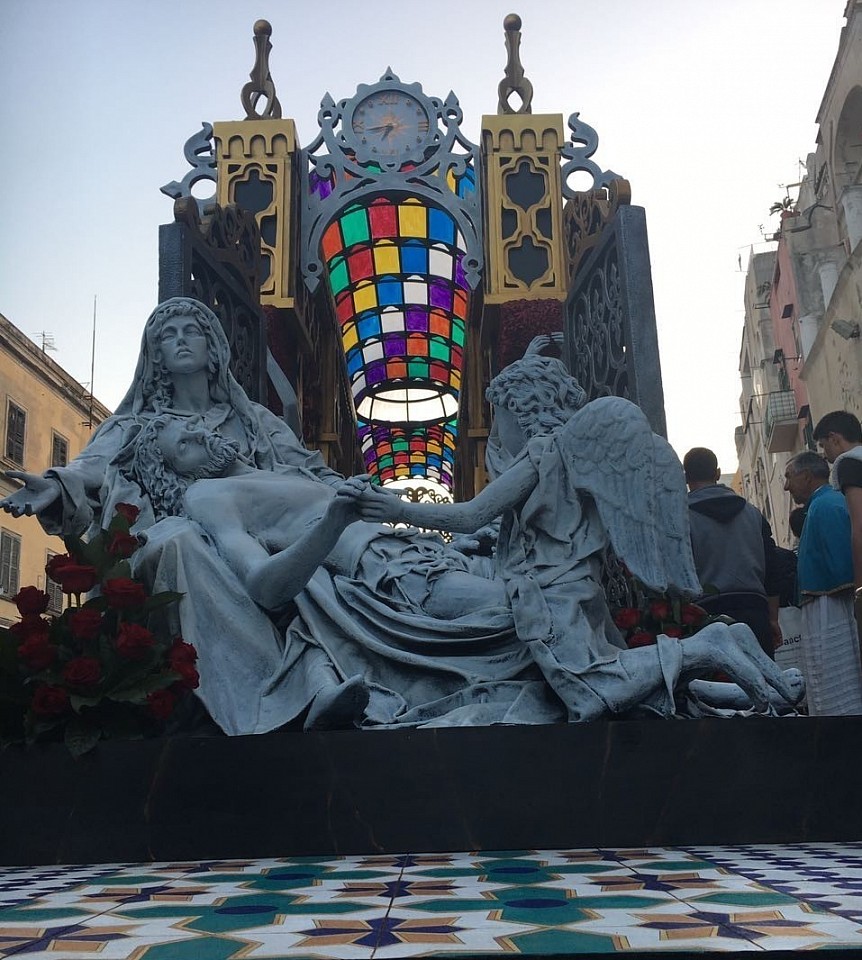
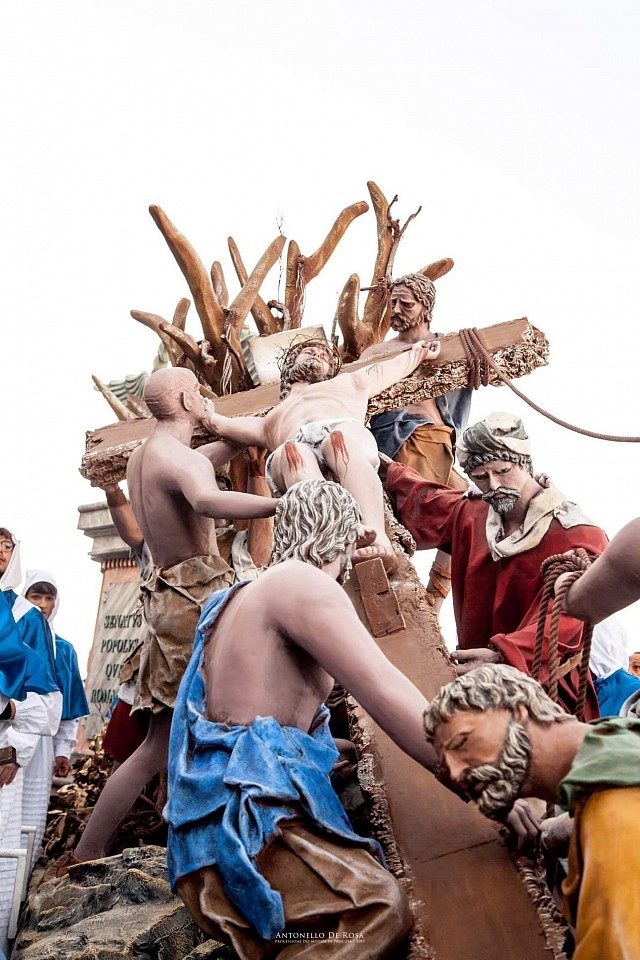
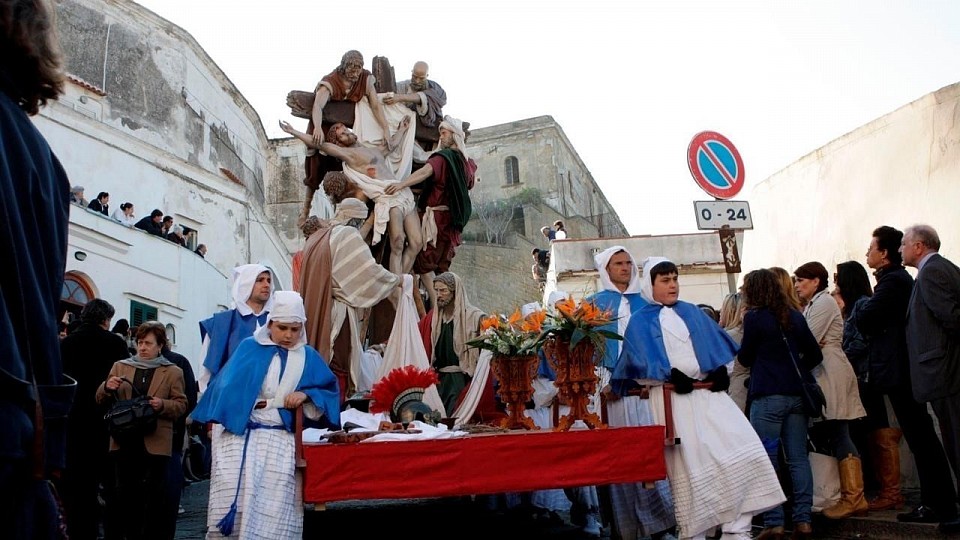
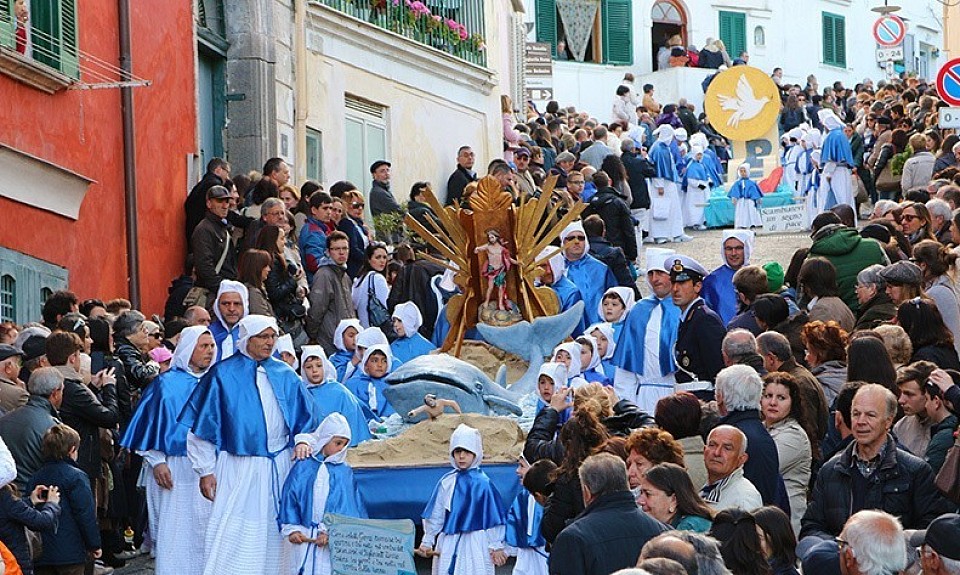
A "Mistero" is a scenic representation of the Passion of Christ, made in the form of a wooden structure carried by hand by the young people of the island. Each "Mistero" depicts biblical episodes related to the Passion, but sometimes also social or allegorical themes inspired by Christian values.
These works, unique in their kind, are not simple floats but real artistic installations built with materials poor, often recycled, and with a strong symbolic component.
Stages of Building a Mistero
1. Ideation and Sketch
• Preparation begins months before the procession , usually after Christmas.
• Groups of young people, often led by experienced craftsmen or as former participants, they begin to devise the theme and create a sketch on paper .
• The theme can be strictly religious or more current, with references to the problems of the modern world (wars, injustices, social crises).
2. Choice of Materials
• The Mysteries are built with simple materials and lightweight, for easy transport:
• Wood for the main structure
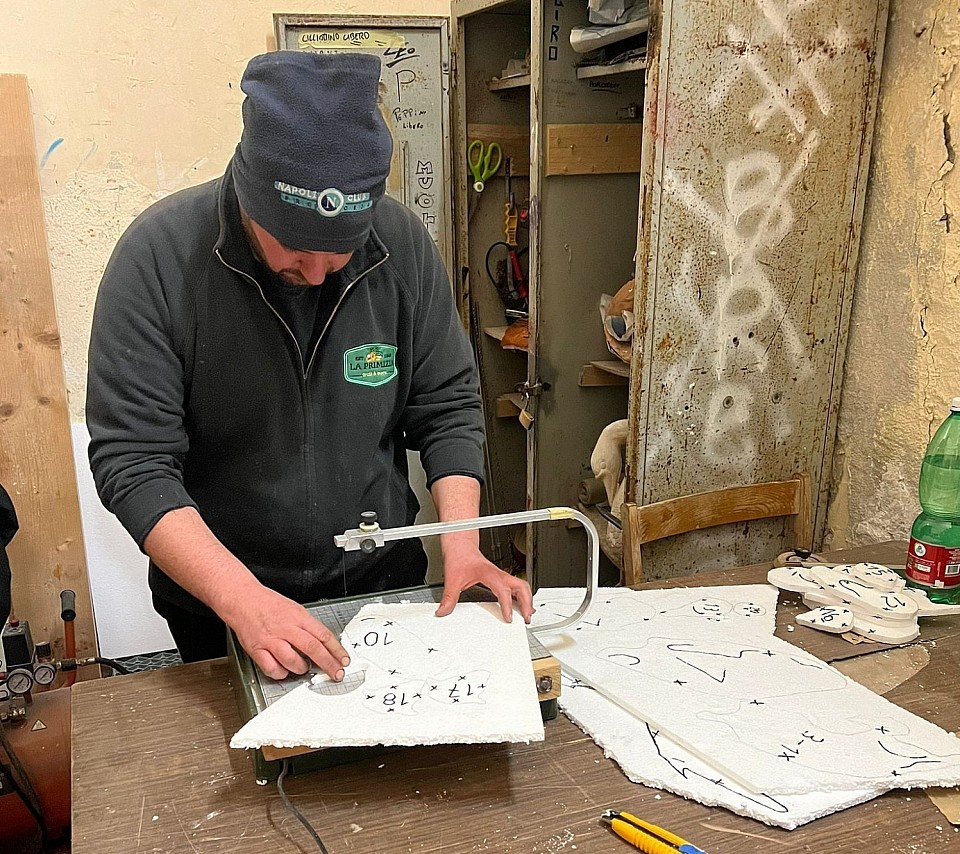
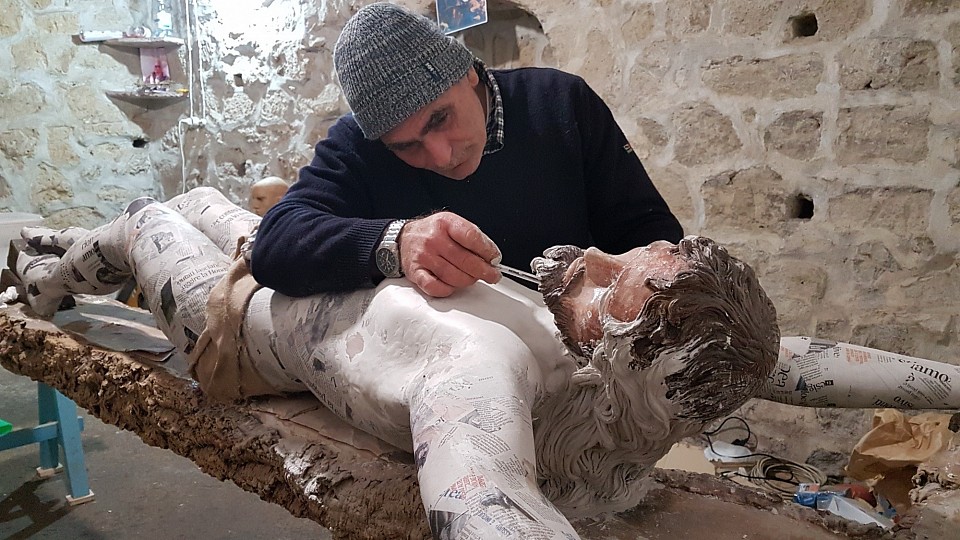
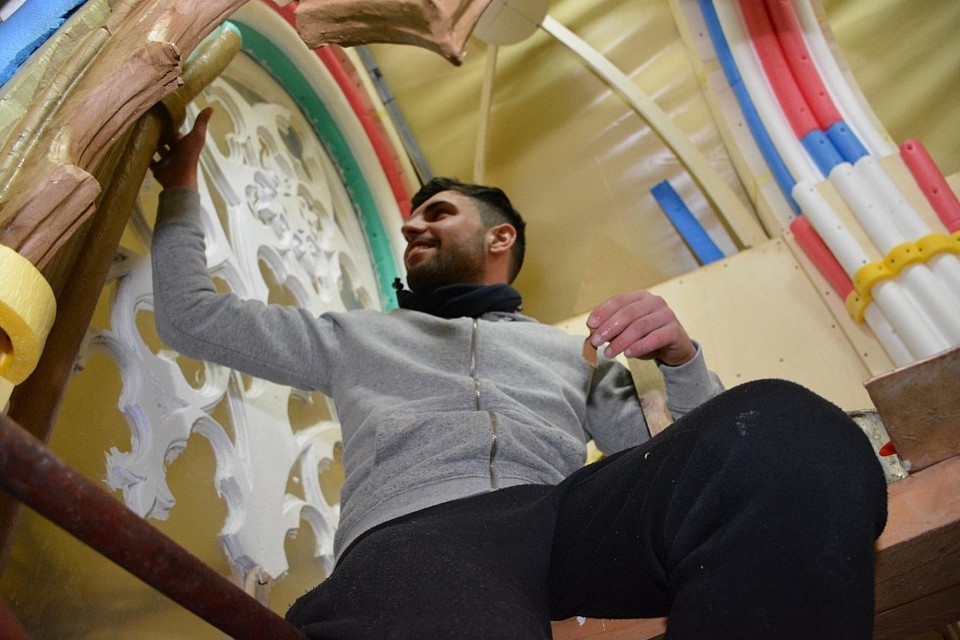
• Papier-mâché and polystyrene for decorative elements and details
• Canvas, fabrics, ropes for coverings and finishings
• Acrylic and tempera colors for painting scenes
• A fascinating aspect is the use of recycled materials, such as old furniture, wooden boxes and carpentry scraps, in a tradition of sustainability handed down over the centuries.
3. Construction and Assembly
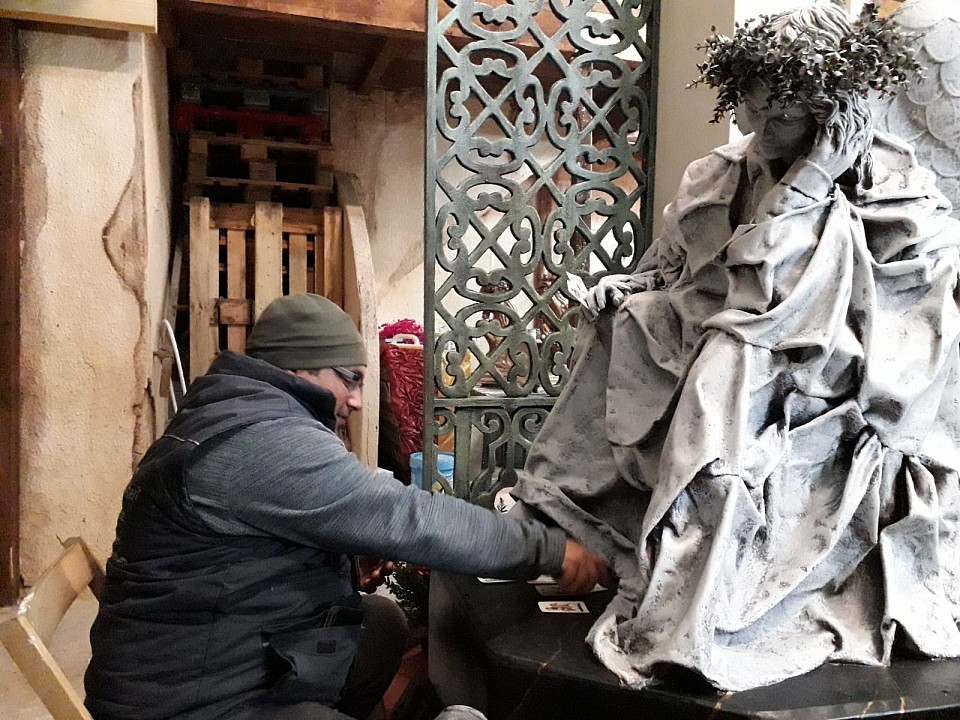
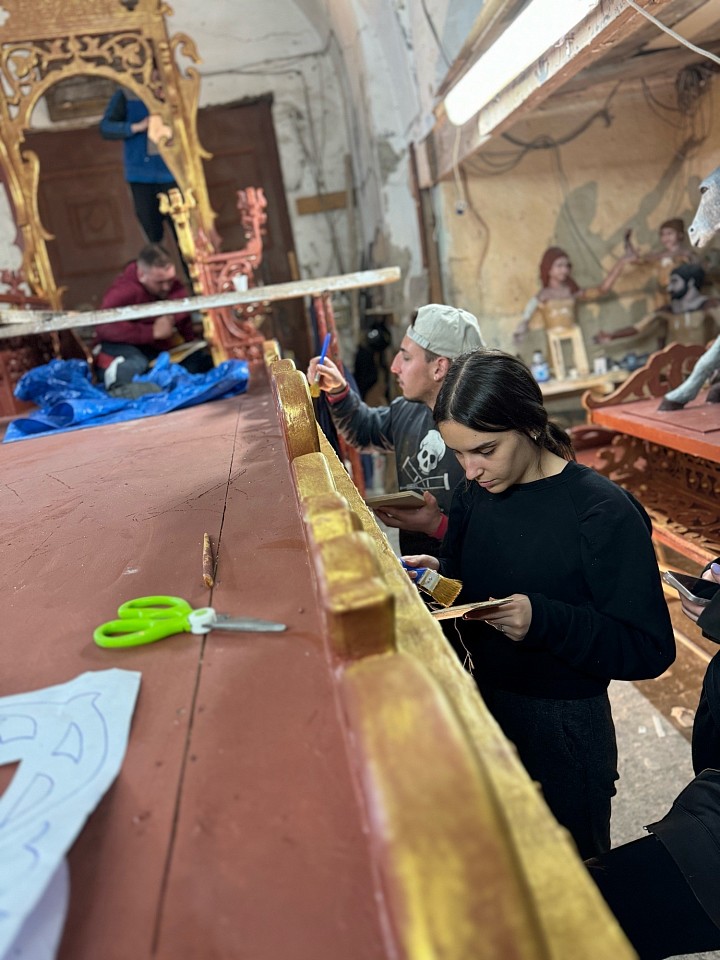
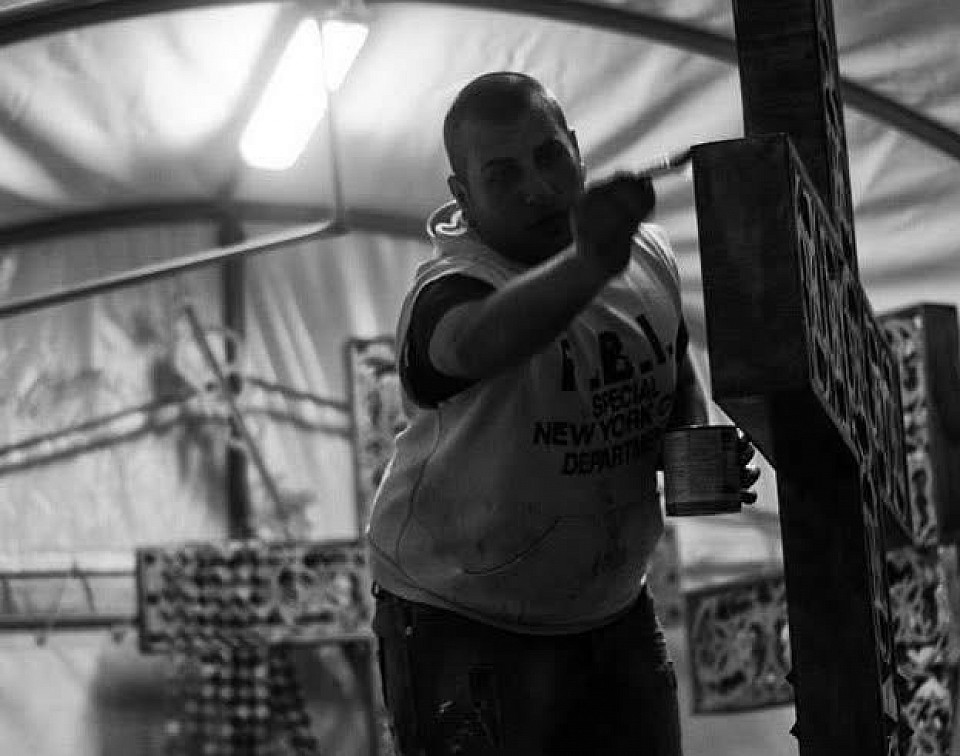
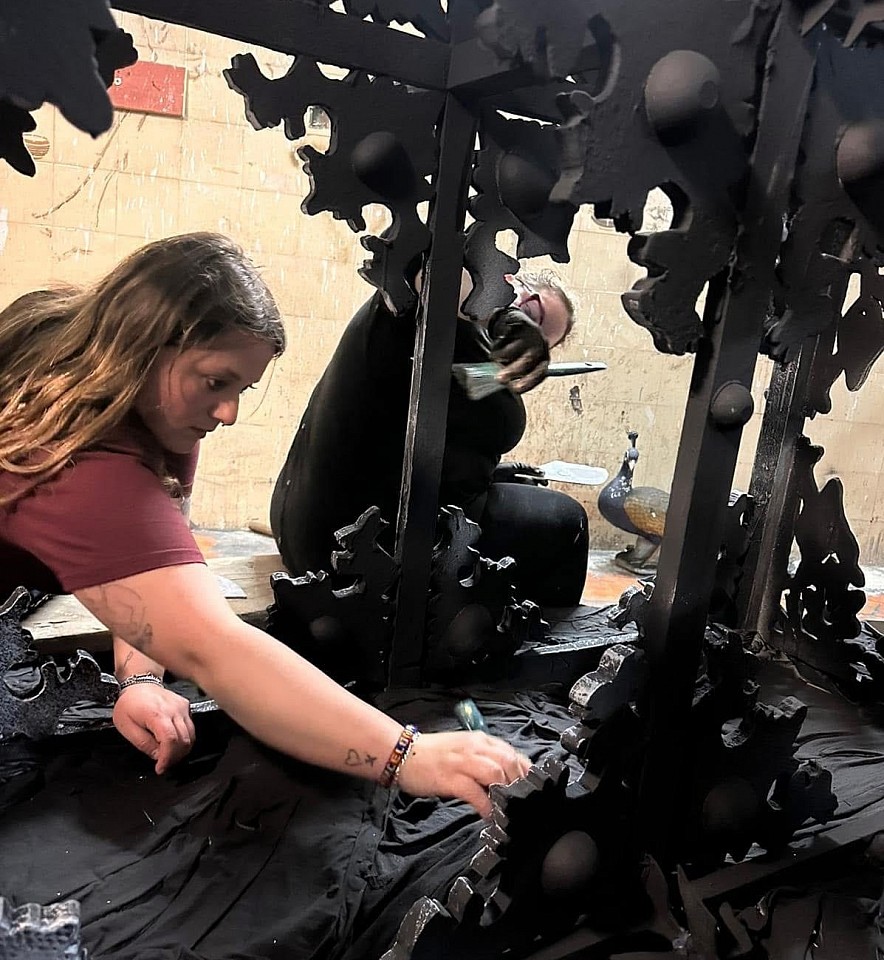
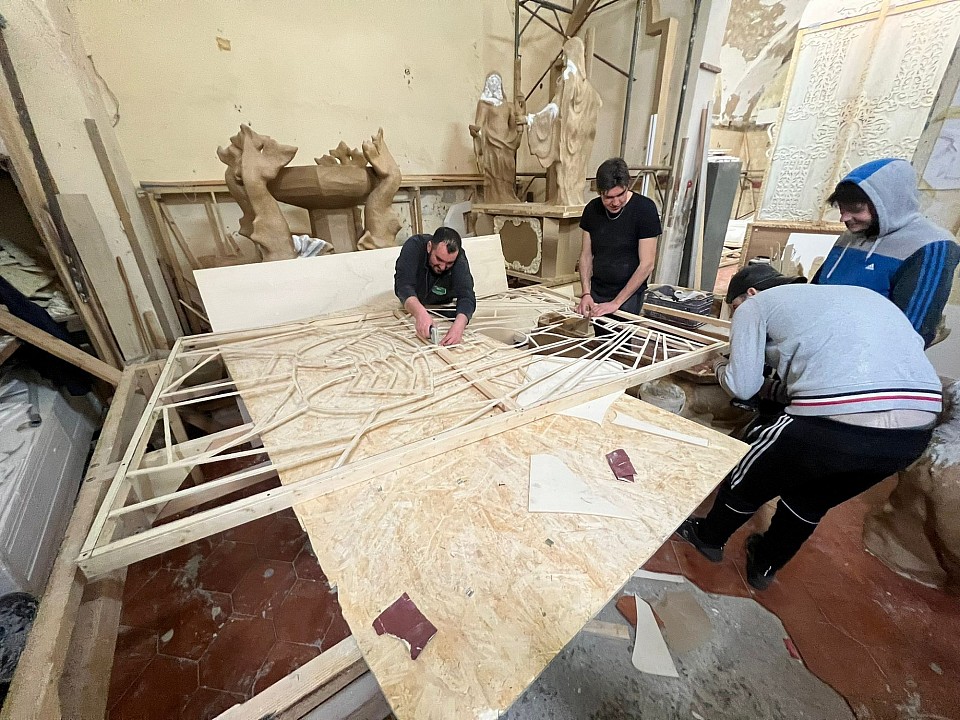
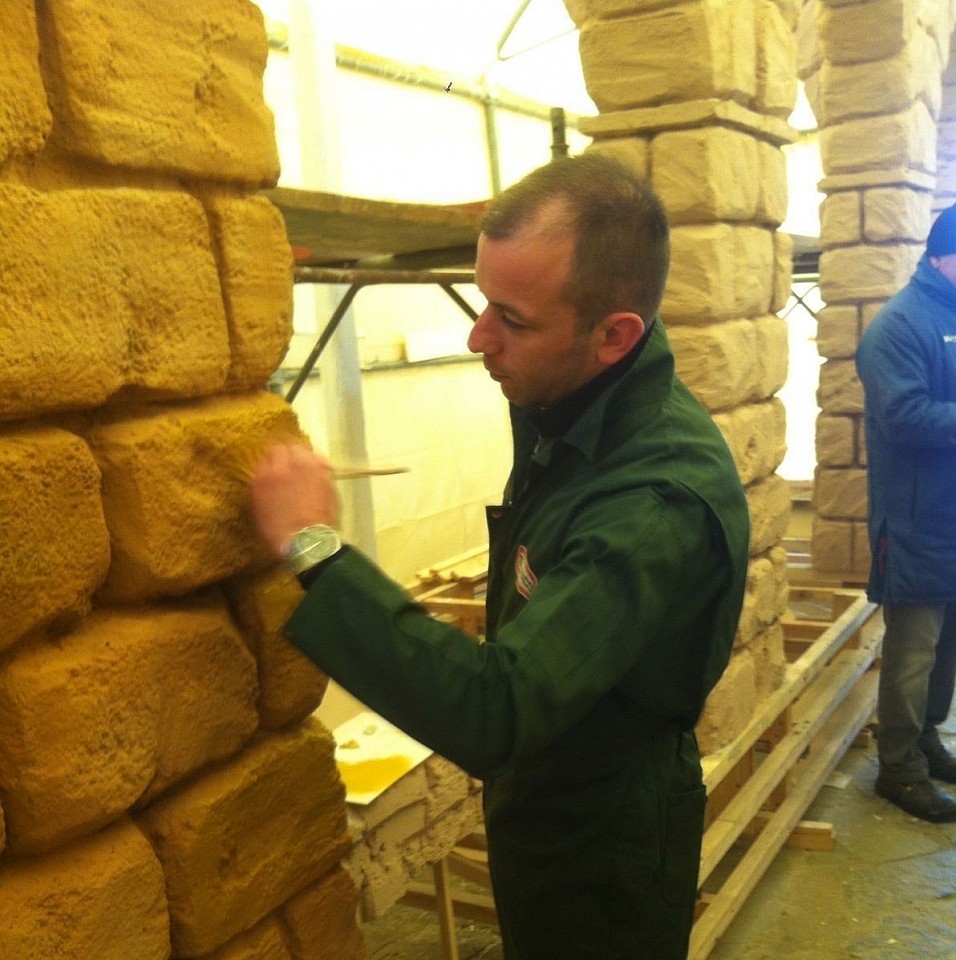
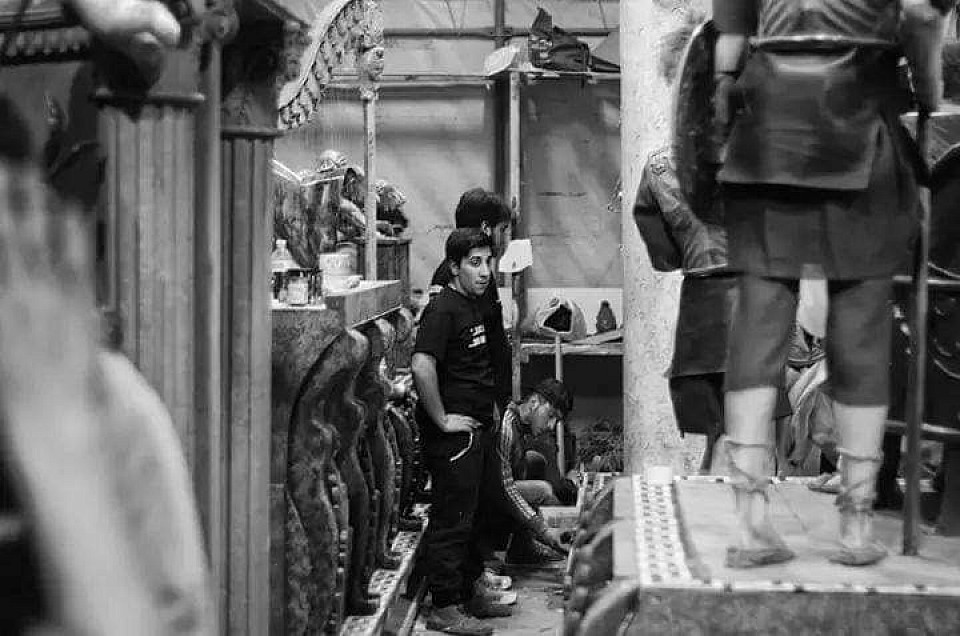
• Most of the construction takes place on-site set up by the Association inside the former prison of Procida. Otherwise, often for the little ones, they are built in private garages, cellars and small laboratories scattered around the island, transformed for months into workshops artistic.
• It starts with the construction of the base, usually a wooden frame with supports for easy transport.
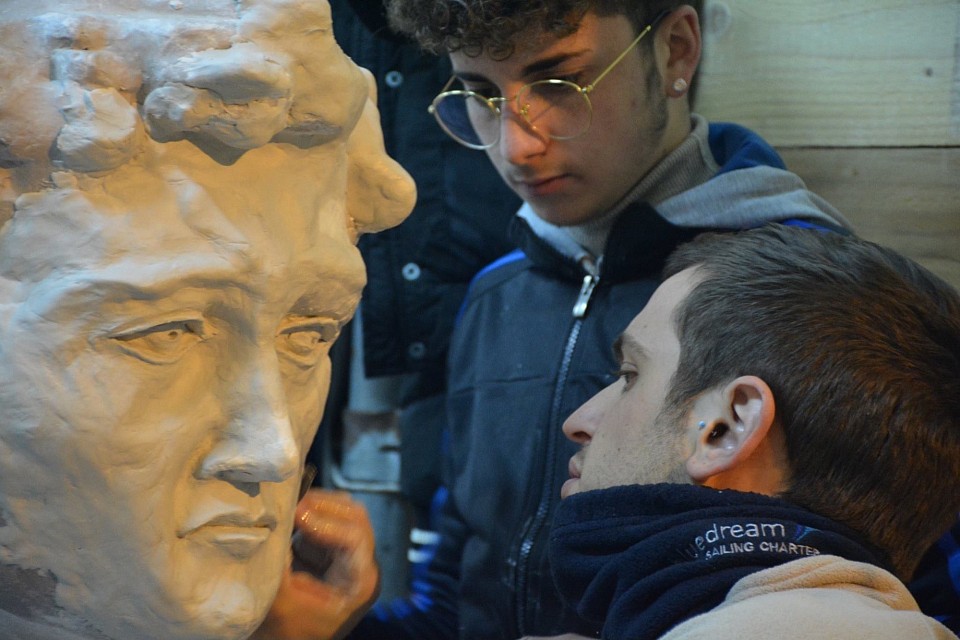
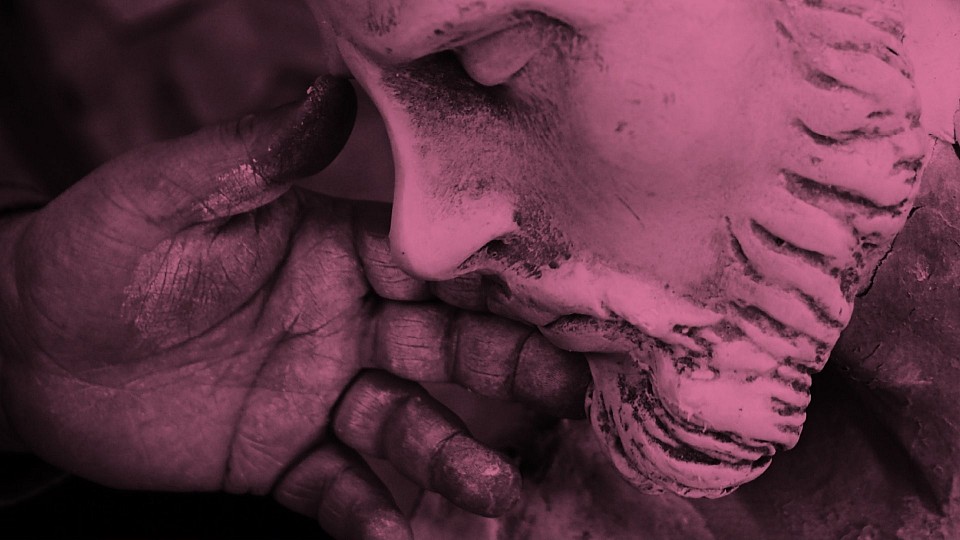
• The figures are then modelled, often in papier-mâché or sculpted polystyrene and painted with bright colors.
• Some Mistero include mechanical or moving elements, like parts that open up to reveal further scenic details.
• The final touches are the painting and finishing with drapes and decorations.
4. The Transport and the Parade
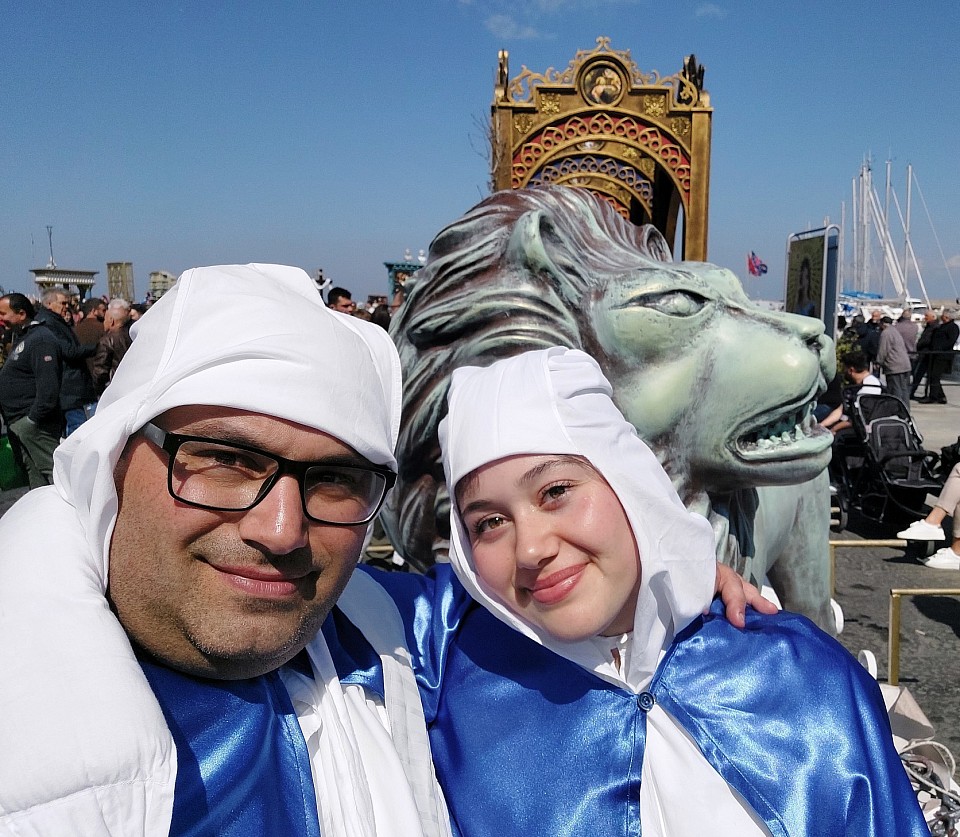
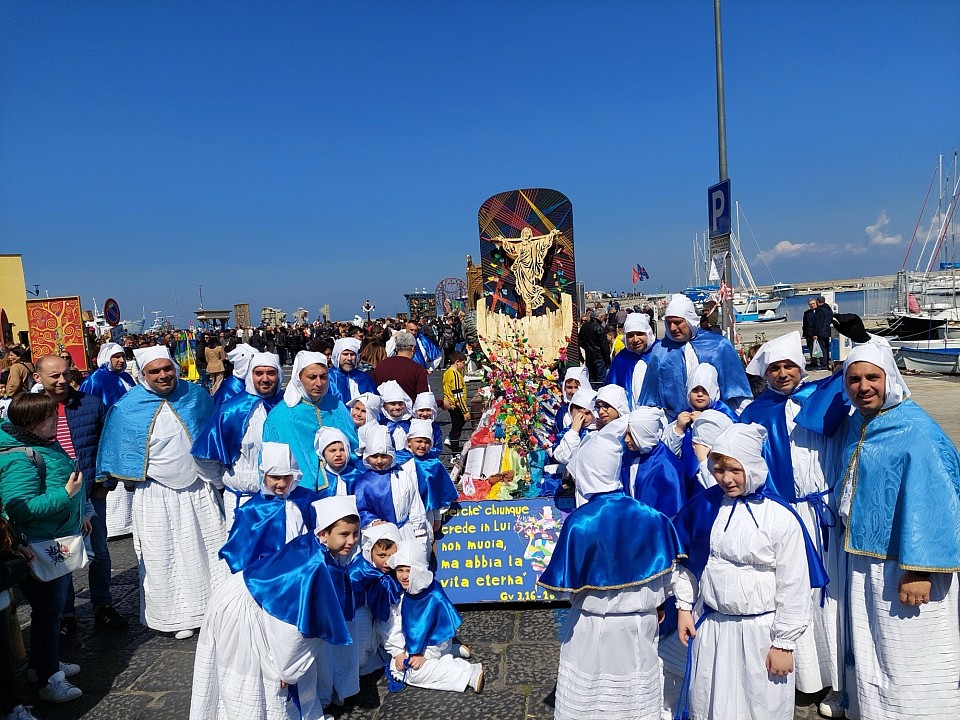
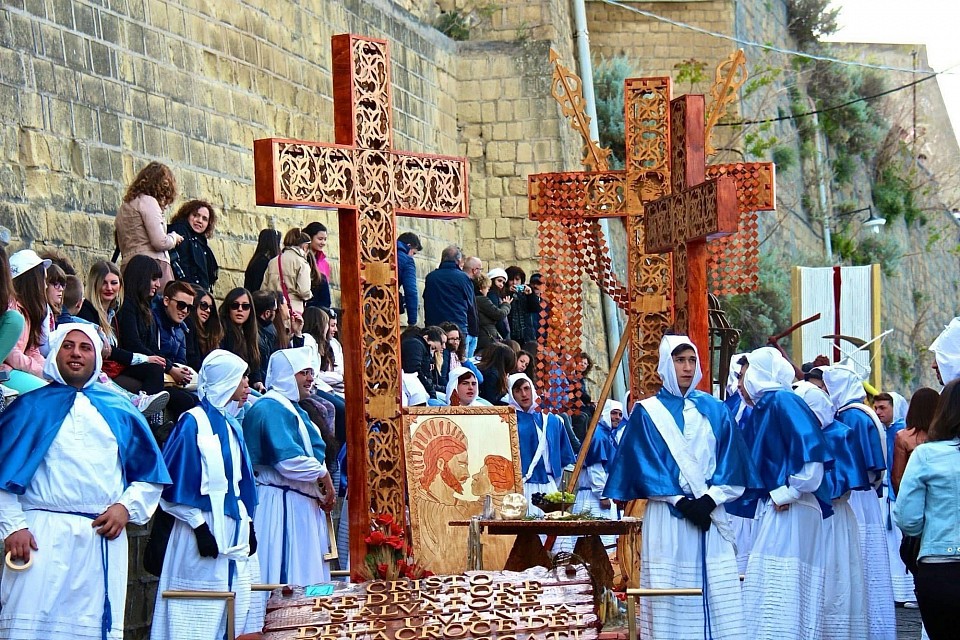
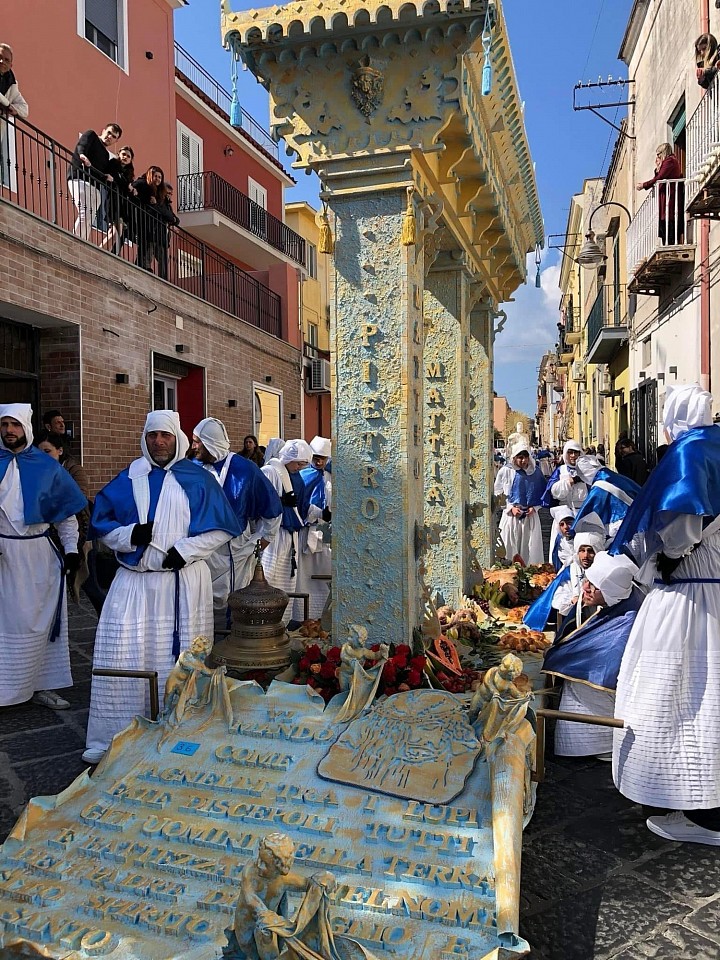
• Each Mystery is carried by hand (often helped, for the heaviest ones, a strap on one shoulder to make it easier to carry) by a group of boys dressed in white and turquoise.
• The procession starts from Piazza d'Armi, near the Abbey of San Michele Arcangelo, located in the highest and oldest part of the island and goes down the main alleys of the historic center, with the Mysteries advancing in silence, broken only by the evocative sound of the trumpet and drums.
5. After the Procession: Dismantling or Storage
• After the procession, many Misteri are dismantled and the materials reused for the following year.
• Some particularly significant Misteri are preserved for exhibitions left as artistic testimony.
The Spiritual and Community Meaning
The construction of Mysteries is much more than an activity artisanal:
• It is a moment of aggregation and transmission of the tradition, where children, young people and adults, often even elderly people, work Together.
• For the boys of the island it is a rite of passage : participating in the construction of a Mistero is a source of pride and marks entry into the community life of Procida.
• Each Mistero is a work of faith and reflection: whoever builds it does not limit himself to creating a work of art, but he makes a gesture of personal devotion .